We provide specialized winterization services to safeguard your pool during the off-season, and when spring arrives, we handle the thorough opening process.

Blog

Ministry of Coal Notice on Performance Bank Guarantee (PBG) Renewal Timelines

On June 1, 2026, the Nominated Authority under the Ministry of Coal issued an official   notice regarding the renewal and extension of Performance Bank Guarantees (PBGs). The notice serves as a standing instruction for all companies holding coal block allotments under various agreements, such as Allotment Agreements, Coal Block Development and Production Agreements (CBDPA) and Coal Mine Development and Production Agreements (CMDPA). Allocatees are now required to submit renewed/extended original physical bank guarantees at least seven working days before the existing guarantee expires. The Regulatory Requirements1. The notice refers to Clause 6.1.6 of the respective project agreements. This clause mandates that the Performance Security must remain valid until the earliest of the following milestones occurs: The expiry of the period for which the Mining Lease has been granted or will be granted. The point up to which extractable reserves remain in the coal mine. The achievement of the Peak Rated Capacity of the mine, depending on the specific terms of the agreement. 2. The Nominated Authority highlighted specific procedural issues that led to the issuance of this notice: Last-Minute Renewals: In certain instances, renewals or extensions were being delayed until the final day of expiry, creating ambiguity about whether the submission was completed on time. Digital vs. Physical Submissions: On multiple occasions, companies submitted only scanned copies of the renewed PBGs before the deadline, while the original physical documents arrived after the expiry date. Responsibility: The notice clarifies that the responsibility for keeping the PBG valid rests solely with the allocatee, regardless of whether any reminder or communication is sent by the Nominated Authority’s office. Insights:1. To address past delays, the Nominated Authority has directed all allocatees to ensure their PBG remains valid at all times. When a bank guarantee is due to expire, the allocatee must complete the renewal process and deliver the renewed original physical document to the office of the Nominated Authority at least seven (07) working days prior to the expiry date of the current PBG. 2. Failure to meet the seven working day timeline or failure to submit the original physical document will be treated as a formal non-compliance with the agreement. This will attract penalties under the terms of the contract, which include the 100% appropriation of the Performance Security. 3. This notice is issued to establish uniformity and transparency across all existing contracts. The document states that this timeline must be treated as a standing instruction for all future renewals of Performance Bank Guarantees. Actionable Advice (What businesses should consider) Compliance teams should immediately review the expiry dates of all active PBGs linked to their CBDPAs, CMDPAs, or Allotment Agreements. Internal corporate processing and coordination with bank timelines must be accelerated. Because the physical original document must reach the New Delhi office seven working days before expiry, the bank process should be initiated several weeks in advance. Revised guidelines do not permit renewed BGs on email or portal uploads of scanned copies on the final day, as only the physical original satisfies the requirement.

Read More
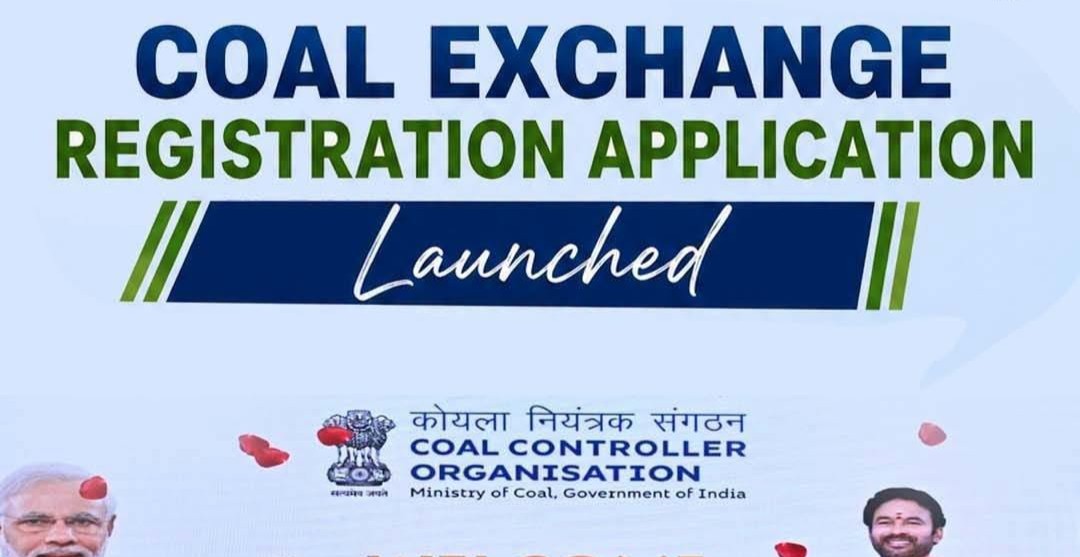

India’s First Coal Exchange Registration Portal Goes Live: A New Era for Modern Coal Trading

On July 15, 2026, the Ministry of Coal officially launched the online application portal for the registration of Coal Exchanges in India. Unveiled during the event for Indian Mining Week 2026 in New Delhi, this initiative marks India’s transition from policy formulation to full operational readiness. By inviting eligible entities to formally apply for registration, the government has set in motion a modern, transparent, and market-driven ecosystem for delivery-based coal trading under strict regulatory oversight. The motive for establishing this portal was to establish transparent price discovery, building market trust and security. This also enhances ease of doing business and includes private participation.Legislative and Regulatory FrameworkThe rollout of Coal Exchanges rests on a structured legislative and regulatory foundation: Mines and Minerals (Development and Regulation) Amendment Act, 2025: Introduced the primary legal concept of Mineral Exchanges in India. Coal Exchange Rules, 2026: Notified by the Ministry of Coal to lay down the detailed regulatory framework for establishing, operating, and governing Coal Exchanges. The Designated Regulator: The Coal Controller Organisation (CCO) has been officially designated as the regulatory authority responsible for registering, overseeing, and monitoring all registered Coal Exchanges. What is a Coal Exchange? Core Features and FunctionalityA Coal Exchange is defined as an online trading platform where buyers and sellers of coal—as well as its processed form—can transact, trade, and enter into delivery-based coal contracts approved by the Authority. This marks a paradigm shift away from traditional allocation models to a modern, neutral, and competitive trading platform. Key Architectural Features of the Platform Include: Transparent Price Discovery: Enables market-driven pricing mechanisms. Quality Assurance: Quality is guaranteed through coal sampling agencies approved directly by the Authority. Market Surveillance: Features advanced market surveillance systems to ensure fair trading practices. Secured Clearing & Settlement: Transactions are backed by a dedicated settlement fund to guarantee clearing and settlement stability. Grievance Redressal: Includes a dedicated and effective grievance redressal mechanism for all market participants. Broad Connectivity: Unifies coal sellers, buyers, and various market participants on a single robust platform. Operational Guidelines, Portal Details, and Registration TermsWithin one month of publishing the Coal Exchange Rules, 2026, the Coal Controller Organisation (CCO) developed detailed guidelines and launched the digital portal supported by a comprehensive User Manual. 1. Digital Portal Interface Official Website: www.coalcontroller.gov.in/coalexchange End-to-End Functionality: The portal provides a fully digital interface allowing applicants to register, upload supporting documentation, submit applications, and track their submission status in real-time. Fee Payment Integration: Prescribed registration fees must be remitted directly through the Bharat Kosh Portal. 2. Entity Rights and Registration Validity Authority Approval: Registered entities will be authorized to establish and operate exchanges, formulate market rules, and facilitate coal trading, subject to prior approval from the Authority. 25-Year License Validity: Registrations will remain valid for 25 years, providing long-term institutional stability for market operators and investors. Strategic Impact on India's Energy SectorThe launch of operational Coal Exchanges delivers several immediate structural benefits: Ease of Doing Business: Streamlines coal procurement and sales workflows through digital mechanisms. Supply-Chain Resilience: Provides a responsive, flexible marketplace that absorbs demand-supply shocks. Private Participation & Investment: Transparent pricing and long-term regulatory clarity will attract greater private sector investments. Industrial Growth: Delivers reliable access to fuel resources for core manufacturing and power sectors.  Actionable Guidance for Prospective Applicants Review Guidelines & User Manual: Interested organizations should visit www.coalcontroller.gov.in/coalexchange to review the CCO's detailed operational guidelines and registration manual. Prepare Documentation & Governance Rules: Ensure that proposed exchange operational structures, market rules, and clearing mechanisms meet CCO standards. Utilize Bharat Kosh for Fee Processing: Setup necessary accounts on the Bharat Kosh portal to complete fee remittances seamlessly during application submission.

Read More

New Rules for Adjudicating Penalties in Coal Mines: An Easy Guide

Executive Summary: On August 3, 2026, the Ministry of Coal published a new set of rules in the Gazette of India called the Coal Mines (Special Provisions) Adjudication of Penalties Rules, 2026. The main purpose of these rules is to create a clear process for how the government will handle inquiries and set fines if someone breaks the rules under the Coal Mines (Special Provisions) Act, 2015. How the Inquiry Process WorksIf the official "adjudication authority" believes someone broke the rules, they can start an inquiry on their own or after receiving a complaint. To help with the investigation, the authority will appoint an "Inquiry Officer," who must hold at least the rank of an Under Secretary to the Government of India. During the inquiry, the authority has the power to: Ask for any information, records, books, or documents. Order any person who knows about the case to attend meetings. Ask for written explanations. Get technical or inspection reports from experts or government bodies. Notices and HearingsWhen the authority decides there is enough evidence to look into a case, they will issue a formal notice using a specific document called Form-I. What happens when you get a notice? Time to Reply: The notice will give the person a specific time to reply in writing, which is usually between 15 and 30 days. How it is Sent: Notices and orders can be sent via speed post, email or digital platforms, hand delivery, or any other suitable method. The Hearing: The person gets a fair chance to be heard, either in person or through an online video meeting. They can also send an authorized representative to speak for them. Missing a Hearing: If a person receives the notice but does not show up, the authority can move forward and make a decision without them based on the available records. How Penalties are DecidedWhen deciding the final amount of a penalty, the authority will look at several important factors: How serious the rule break was and how long it lasted. Whether the person has broken the rules before. Any unfair profit or advantage the person gained from breaking the rules. The amount of loss caused to public interest or government money. Whether the action was intentional, dishonest, or done with bad intentions. How cooperative the person was during the inquiry. Any steps the person took to fix the mistake. The Final Order and Paying the FineAfter reviewing all the replies and evidence from the hearing, the authority will write a clear order explaining their decision and the reasons behind it. If a penalty is given, it must be paid within 30 days from the date the order is received, unless the authority agrees in writing to give more time. The money must be deposited into a specific government account. If the penalty is not paid on time, the government can take legal steps to recover the money. Actionable Advice for Mine Operators Keep Your Contact Info Updated: Make sure your company's email addresses and digital accounts registered with the government are correct, as official notices sent there will be considered legally valid. Respond on Time: If you receive a Form-I notice, quickly prepare your written reply and gather your supporting documents, as you only have 15 to 30 days to answer. Cooperate with Inquiries: Because your conduct during the inquiry is a factor in deciding the penalty amount, always cooperate fully with the Inquiry Officer. 

Read More